Performing Resilience for Systemic Pain (2022)
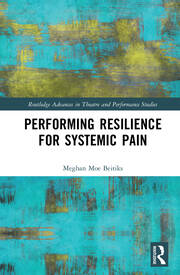
How might performance serve as a means for facing ubiquitous trauma and pain, in humans and ecologies?
While reflecting on my multidisciplinary work Systems of Pain/Networks of Resilience, I consider bodies of knowledge in Trauma Theory, Intersectional Feminist Philosophy, Ecology, Disability Studies, New Materialism, Object-Oriented Ontology, Gender Studies, Artistic Research, Psychology, Performance Studies, Social Justice, Performance Philosophy, Performance Art, and a series of first-person interviews in an attempt to answer that question. I write through the process of making the work and the real-life, embodied encounters with the theories explored within it as an expansion of the work itself. Facing down difficult issues like trauma, discrimination, and the vulnerability of the body, I looks to commonalities across species and disciplines as means of developing resilience and cultivating communities. Rather than paint a picture of glorious potential utopias, I takes a hard look at myself as an embodiment of the values explored in the work, and stays with the difficult, sucky, troubling, work to be done.
Performing Resilience for Systemic Pain is a vulnerable book about the quiet presence and hard looking needed to shift systems away from their oppressive, destructive realities.
Available now from Routledge. To request a review copy, fill out this form. Contact me for inquiries.
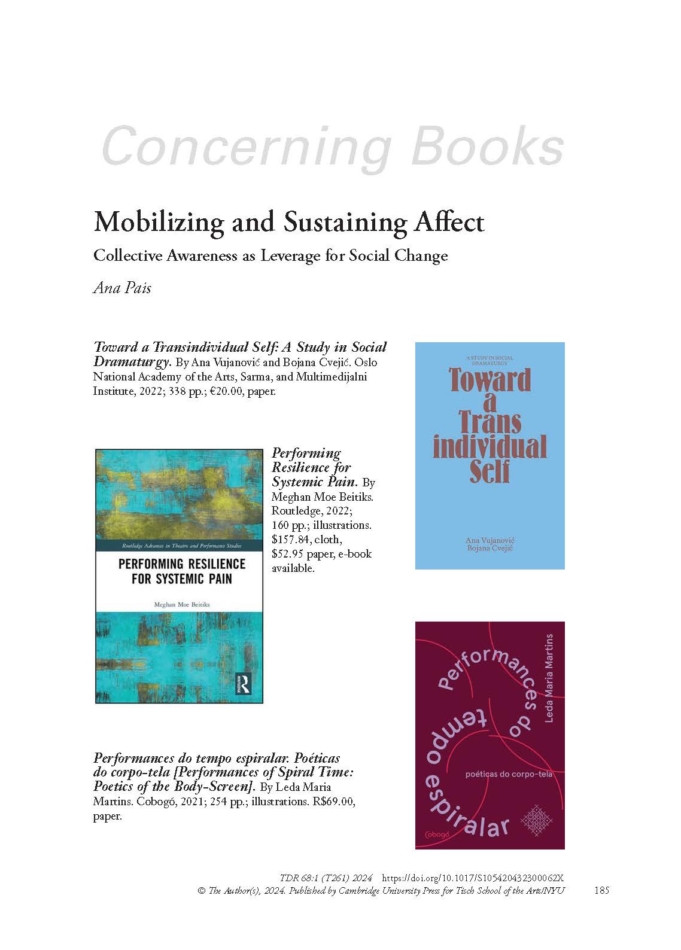
From a review by Ana Pais in TDR: The Drama Review, Volume 68 / Issue 1 / March 2024, p. 185-90:
“Like many performance artists, Meghan Moe Beitiks is invested in imagining and sustaining common futures through the collective enactment of affect, with a particular healing narrative. Her artist book “Performing Resilience for Systemic Pain” focuses on pain as an embodied experience that transcends the individual as pain is positioned within systemic structures of power. The volume follows the artistic process of her project “Systems of Pain/Networks of Resilience” (2015–2018): residencies (Nebraska,New York, and Santa Fe) in which Beitiks interviews locals with experiences in recovering from painful ordeals, culminating in the final exhibition of the project. “Things, people and places help us heal: we do not only heal ourselves” (24). This oft-repeated mantra shapes the book itself with soothing qualities—overflowing with care, vulnerability, and resilience. Connecting individual pain with collective pain and transforming it through artistic creation (whether directly involving the community or not) is one way the arts can contribute to sustaining affective networks, support resistance, and open spaces for raising awareness of the influence of affect in our lives. It’s a way of caring for the present and the future.
Highly aware of the cultural conditionings of both observation and feeling the world around us, Beitiks seeks to share the intentions of her artistic project: to demonstrate that “the forced distance of observation pulls the sighted viewer back into the reality of how they are looking at things, pulls them fully into the present” (18). Discerning affect, as Teresa Brennan would put it, and finding theright words to name bodily states and sensations is crucial to public health (Brennan 2004). That is also what Beitiks’s book aims to do by concentrating on three main operating concepts to work through and transcend the experience of pain: observation, description, and listening. These allow us to displace our common perception of the world, revealing the systemic influence of structures of power as well as raising awareness of our attachments to people, situations, values, etc. Hence, accepting pain, instead of fighting it, can strengthen resilience; discerning the damages of pain can leverage the fight. Artistic projects such as this connect singular experiences within a network of awareness,which is crucial to supporting collective subjectivities and actions, precisely because art has the potential to build narratives that help healing the pain. Such artistic activations can touch our hearts.
As mobilizing forces, love and hope can work to fuel political resistance and action so vigorously that they may quiet pain. This is a challenge for democracy, for the capacity of doing things together, for the capacity of imagining the ancestral future and maintaining the vibrancy of affective mobilization. Without artistic practices such as Beitiks’s, change has less of a chance to stick, despite its apparent visible impact on specific actions of protest. Pain needs to be cared for, individually and collectively, for as much as it can inflame political and artistic action it can also destroy bodies and hearts alike.” — Ana Pais, “Mobilizing and Sustaining Affect: Collective Awareness as Leverage for Social Change,” Concerning Books, TDR: The Drama Review, Volume 68 / Issue 1 / March 2024, p. 185-90
Leave a Reply